

Biography
Levi Tillemann has spent his career working where new technology meets the institutions that decide whether it succeeds: markets, governments and the global companies that have to bet on it. He describes his work as pattern recognition. He reads the data, sees where an industry is heading, and builds the strategy, funding and coalitions to get there first.
He started with his hands. With his father, the Denver inventor Timber Dick, and his brother Corban, he worked on a radically more efficient combustion engine, and in 2009 he founded IRIS Engines to bring it to market. As CEO he raised more than $1 million, earned U.S. and international patents, built working relationships with Chrysler, MIT and AVL, and won the ConocoPhillips Energy Prize, NASA's Create the Future Design Competition and the Dow Sustainability Award. National Geographic profiled the company in 2010.
Alongside the company, he was completing a Ph.D. at Johns Hopkins SAIS on energy, East Asia and industrial policy, and working as an Associate Director at Cambridge Energy Research Associates, where he led the eight-person team behind Daniel Yergin's New York Times bestseller The Quest.
In 2012 he joined the U.S. Department of Energy as Special Advisor for Policy and International Affairs. He conceived and wrote Revolution Now, the department's report on the falling cost of wind, solar, LED lighting and electric vehicles. He created the eGallon metric, worked on the Quadrennial Energy Review and presidential transition planning, advised on U.S.–China trade and investment, and founded the department's Autonomous and Connected Vehicles Energy Working Group, which brought together 20 national laboratories and offices.
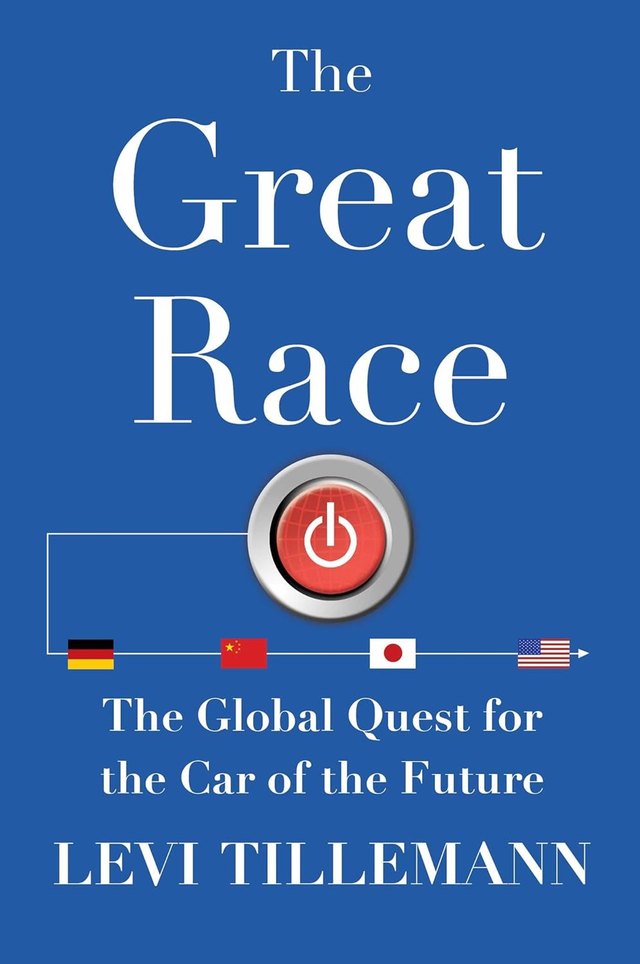
As a fellow at New America he wrote The Great Race: The Global Quest for the Car of the Future (Simon & Schuster, 2015), a history of the century-long competition among the United States, China and Japan to lead automotive technology. Daniel Yergin wrote that “Tillemann tells it all superbly.” He also co-authored a U.S.–German agenda on artificial intelligence commissioned by Germany's Foreign Ministry, and his analysis has appeared in The New Yorker, WIRED, Fortune, The Wall Street Journal and The Washington Post.
Through his advisory firm, Valence Strategic, he has advised leadership at Apple, BP, Toyota, S&P Global and LexisNexis on emerging technology, investment and policy. At the World Economic Forum in Geneva he built and led the Circular Cars Initiative, a coalition of more than 60 public and private organizations working to decarbonize vehicles across their lifecycle.
From 2020 to 2026 he was Vice President for Policy and International Outreach at Ample, the battery-swapping company. He built its international policy function and led market entry in the United States, Japan and Spain, negotiating in Japanese and Spanish. He secured roughly $50 million in competitive public funding, including ¥3 billion in Japan, €10 million in Spain and a $15 million California manufacturing award that he won on appeal after an initial denial.
In 2026 he served as Senior Advisor to S&P Global's CERAWeek, designing the conference program on AI, data centers, quantum computing and industrial transformation, moderating sessions with CEOs, cabinet-level officials and investors, and publishing research on how AI infrastructure and electric vehicles will reshape global electricity demand.
That research led to his next company. In November 2026 he founded a startup building technology to accelerate time to power and improve energy efficiency for data centers.
Levi holds a Ph.D. and an M.A. from Johns Hopkins University, where he was a Toyota Fellow, and a B.A. in history from Yale. He works in English, Mandarin, Japanese, Spanish and Portuguese, and lives in Washington, DC.